Free EU shipping for orders over 60 €
Baby Vision Development
Short Guide
DR. MED. VALENTINA CIGIC
Even among ophthalmologists and pediatric neurologists who are in charge of clinical examinations of infants, opinions vary on what infants perceive, recognize, and use for communication and learning.
Newborn Vision: The First Weeks
The development of visual function in the first year of life is gradual process.
Newborns can see objects that are 20-30 cm (8-12 inches) away.
Right after birth, eyes are very sensitive to light and pupils are quite small. Newborns can see objects that are 20-30 cm (8-12 inches) away and their peripheral vision is better than central.
Within couple weeks pupils widen as retina slowly develops. At that time they are better at recognizing high-contrast images or patterns.
Baby Eye Coordination at 6 Weeks
At the age of six weeks child can begin to focus object in front of them but parent can notice that their eyes do not work together and they can seem to be crossed or wandering.
3 Months: Facial Recognition and Color Preferences
At the age of three months that changes and child can fix and follow slow targets because of improved fixation that becomes steady and maintained.
The perception of color also changes at that time as they start to notice differences between colors and it is important to emphasize that they prefer bright or shiny objects.
Social engagement changes as they start have interest in faces resulting in recognizing familiar ones.

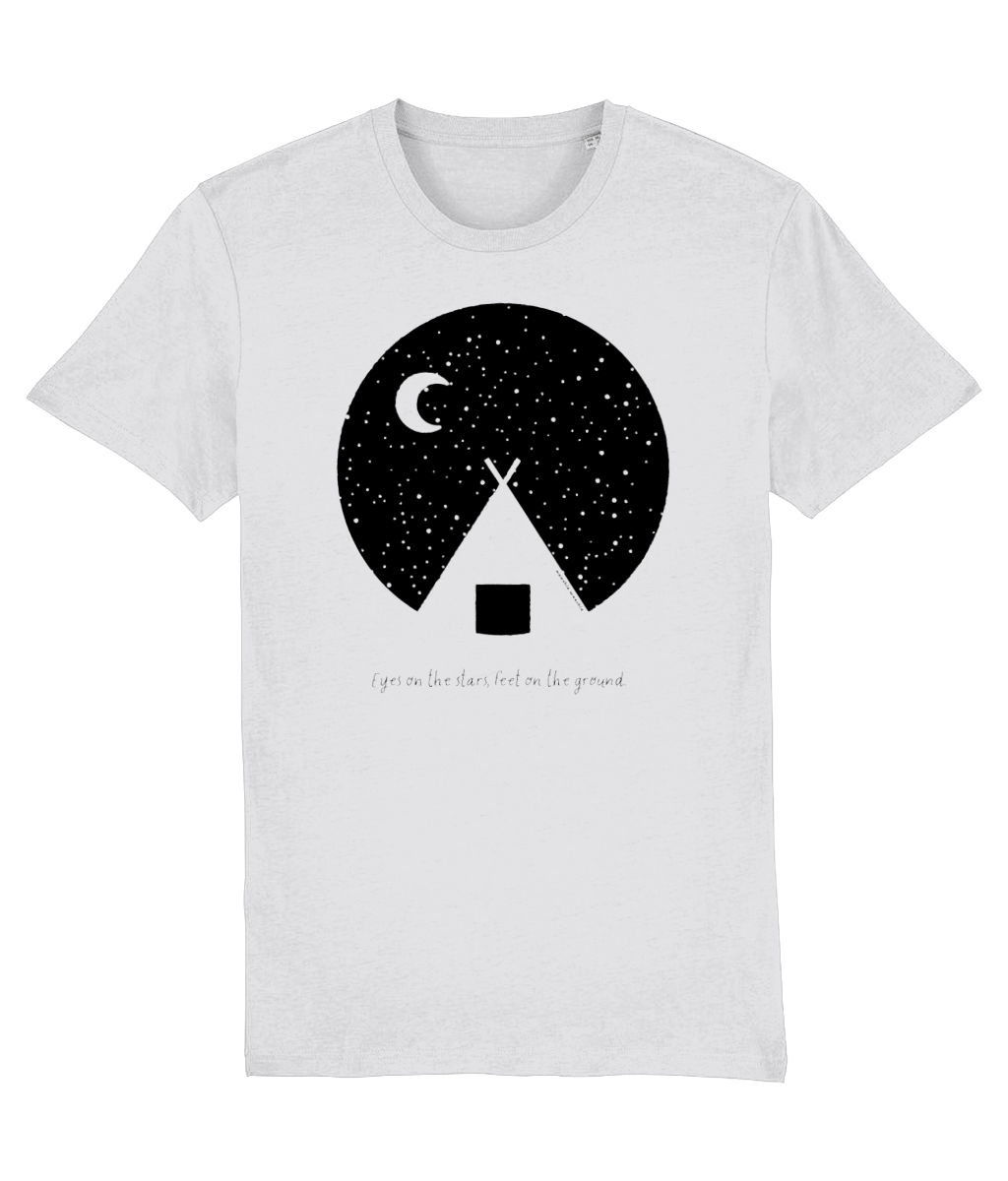
Mooshie Wooshie T-Shirt, as seen by 1 week old
(REBIScan and Boston Children’s Hospital’s simulator)

Neutral nursery, as seen by 1 week old
(REBIScan and Boston Children’s Hospital’s simulator)
4–9 Months: Grasping and Spatial Awareness
Better depth perception and hand-eye coordination starts at 4-6 months resulting in beginning of grasping objects.
At age of 6 months visual acuity sharpens significantly and they can begin to recognize parents across the room.
Later, approximately at 7-9 months they begin to understand spatial relationships and can judge distances more accurately.
For objects they acknowledge they they continue to exist even when they are out of the sight and they can remember objects, even if they see just a part of it.
9–12 Months: Sharper Vision and Cognitive Growth
Vision continues to become more refined at the end of first year allowing them to track better fast-moving objects which supports further development of more delicate movements.
Also, around 9-12 months baby’s eyes have their final colour.
One Year Milestone: Vision That Supports Exploration
By the end of the first year, most infants have developed vision that supports their exploration and interaction with the world around them, laying the groundwork for further visual and cognitive development.
Dr.med., Valentina Cigic
Specialist in ophthalmology and optometry
Nurture your baby’s vision journey with Mooshie Wooshie’s high-contrast T-shirts. Explore our collection and join our community of parents dedicated to early learning and discovery.
Our recommendations for best start: